
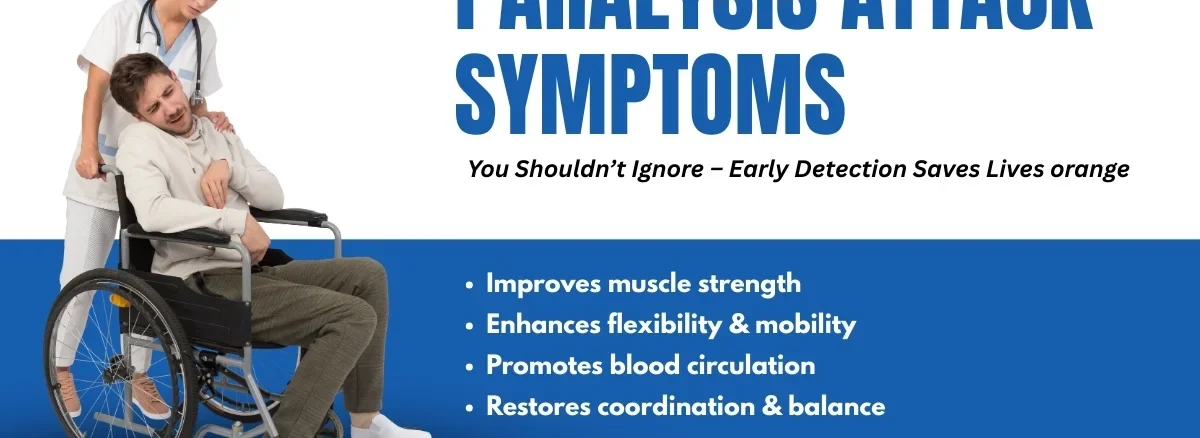
A paralysis attack, often caused by a stroke, is a medical emergency where timely intervention can mean the difference between full recovery and permanent disability—or even death. Recognizing the early symptoms of paralysis is critical. The faster you act, the better the chances of reducing brain damage and improving recovery.
At Orange Physiocare, under the expert leadership of Dr. Pinky Bhatiya Topiwala, we emphasize early detection and advanced non-surgical neurological rehabilitation for patients with paralysis in Indore.
What Is a Paralysis Attack?
A paralysis attack refers to a sudden loss of muscle function in part of the body, most commonly due to a stroke, when blood flow to a part of the brain is disrupted. This lack of oxygen causes brain cells to die, which can affect your ability to move, speak, or think clearly.
There are two major types:
- Ischemic Stroke: Caused by a blood clot blocking a brain artery (most common – 85%).
- Hemorrhagic Stroke: Caused by bleeding in the brain due to a ruptured blood vessel.
In some cases, a Transient Ischemic Attack (TIA) or “mini-stroke” can occur, with temporary symptoms that last less than 24 hours but carry the same risks if ignored.
Early Symptoms You Shouldn’t Ignore
One of the most powerful tools to detect a stroke or paralysis attack is the BE FAST mnemonic:
|
Acronym |
Symptom |
What You Should Do |
|
B – Balance |
Sudden loss of coordination or dizziness |
Sit or lie down immediately; avoid sudden movements |
|
E – Eyes |
Double vision, blurred vision, or sudden loss of sight |
Check for pupil asymmetry or visual confusion |
|
F – Face |
One side of the face droops when smiling |
Ask them to smile and look for facial imbalance |
|
A – Arms |
Numbness or weakness in one arm |
Ask them to lift both arms and see if one drifts down |
|
S – Speech |
Slurred speech or trouble understanding |
Ask them to repeat a sentence; listen for clarity |
|
T – Time |
Time is critical—call emergency services immediately |
Note the time when symptoms started |
Other Key Symptoms
- Sudden severe headache (especially with vomiting or altered consciousness)
- Numbness or tingling in the limbs
- Difficulty swallowing
- Sudden confusion or inability to speak
- Loss of bladder or bowel control (in severe cases)
If you or a loved one notices even one of these signs, do not delay—call emergency services immediately.
What Causes a Paralysis Attack?
-
Common causes and risk factors include:
- Hypertension (High Blood Pressure)
- Diabetes Mellitus
- High Cholesterol
- Atrial Fibrillation or Heart Disease
- Smoking and Alcohol Abuse
- Obesity and Sedentary Lifestyle
- Family History of Stroke
Identifying and managing these risk factors early can greatly reduce your risk of experiencing a paralysis attack.
- Hypertension (High Blood Pressure)
What to Do in Case of a Paralytic Attack
Immediate steps to take:
- Call emergency services immediately – Time lost is brain lost.
- Note the exact time symptoms started – Crucial for treatments like tPA (clot-busting drug).
- Don’t offer food or drink – Swallowing may be compromised.
- Don’t drive the patient – Wait for professional medical transport.
- Keep the person calm and still – Movement could worsen the condition.
At Orange Physiocare, our neurological physiotherapy programs help post-stroke patients regain strength, coordination, and independence through non-surgical, drug-free rehabilitation.
Diagnosis and Treatment
Hospital Tests
- CT scan / MRI to identify stroke type
- Blood tests to evaluate clotting and cholesterol
- Carotid Doppler & ECG to find the heart or artery causes
Treatment Options
- Ischemic Stroke: Intravenous thrombolysis (tPA) within 4.5 hours, or mechanical clot retrieval
- Hemorrhagic Stroke: Blood pressure management, surgical options in severe cases
- Rehabilitation: Begins 24–48 hours after stabilization
Rehabilitation Services at Orange Physiocare
- Neuro-Physiotherapy for movement, balance, and posture
- Laser Therapy for pain relief and cellular repair
- Dry Needling and Matrix Rhythm Therapy for Spasticity Control
Speech and Cognitive Therapy for communication issues
Long-Term Recovery & Prevention
Recovery from a paralytic attack is a journey, and early rehab makes all the difference. Here’s how to reduce future risk:
✅ Control blood pressure and sugar
✅ Take prescribed antiplatelets or anticoagulants
✅ Eat a heart-healthy diet (low salt, high fiber)
✅ Quit smoking and reduce alcohol
✅ Exercise regularly (150 mins/week)
✅ Monitor cholesterol
✅ Attend regular follow-ups and physiotherapy
Frequently Asked Questions (FAQs)
Q1: What is the first sign of a paralysis attack?
Sudden facial drooping, arm weakness, or slurred speech are early indicators. Use the BE FAST method to identify symptoms.
Q2: How quickly should someone with stroke symptoms be treated?
Treatment within 4.5 hours is critical. This is the “golden window” for stroke recovery.
Q3: Can paralysis from stroke be reversed?
Yes, with early treatment and expert rehabilitation, many patients regain lost function—especially when treated at specialized centers like Orange Physiocare.
Q4: Is a TIA (mini-stroke) dangerous?
Yes. A TIA is a warning sign of a major stroke. Don’t ignore it—seek immediate medical evaluation.
Q5: What type of rehab is best for stroke paralysis?
Customized neurological physiotherapy, including laser therapy, dry needling, and guided movement therapy, offers the best outcomes.
Q6: When should I start rehab after a stroke?
The earlier the better—usually within 24–48 hours of stabilization, under medical guidance.
Q7: Where can I get expert non-surgical treatment for paralysis in Indore?
At Orange Physiocare, Indore, led by Dr. Pinky Bhatiya Topiwala, one of MP’s most trusted neuro-physiotherapists.
Start Your Recovery Today
Don’t ignore the warning signs of a paralysis attack. Early detection and specialized care save lives.
👉 Call now: 9425054231
👉 Book an appointment online: orangephysiocare.com/appointment
Experience world-class physiotherapy for paralysis and stroke rehab—without surgery, only at Orange Physiocare.